


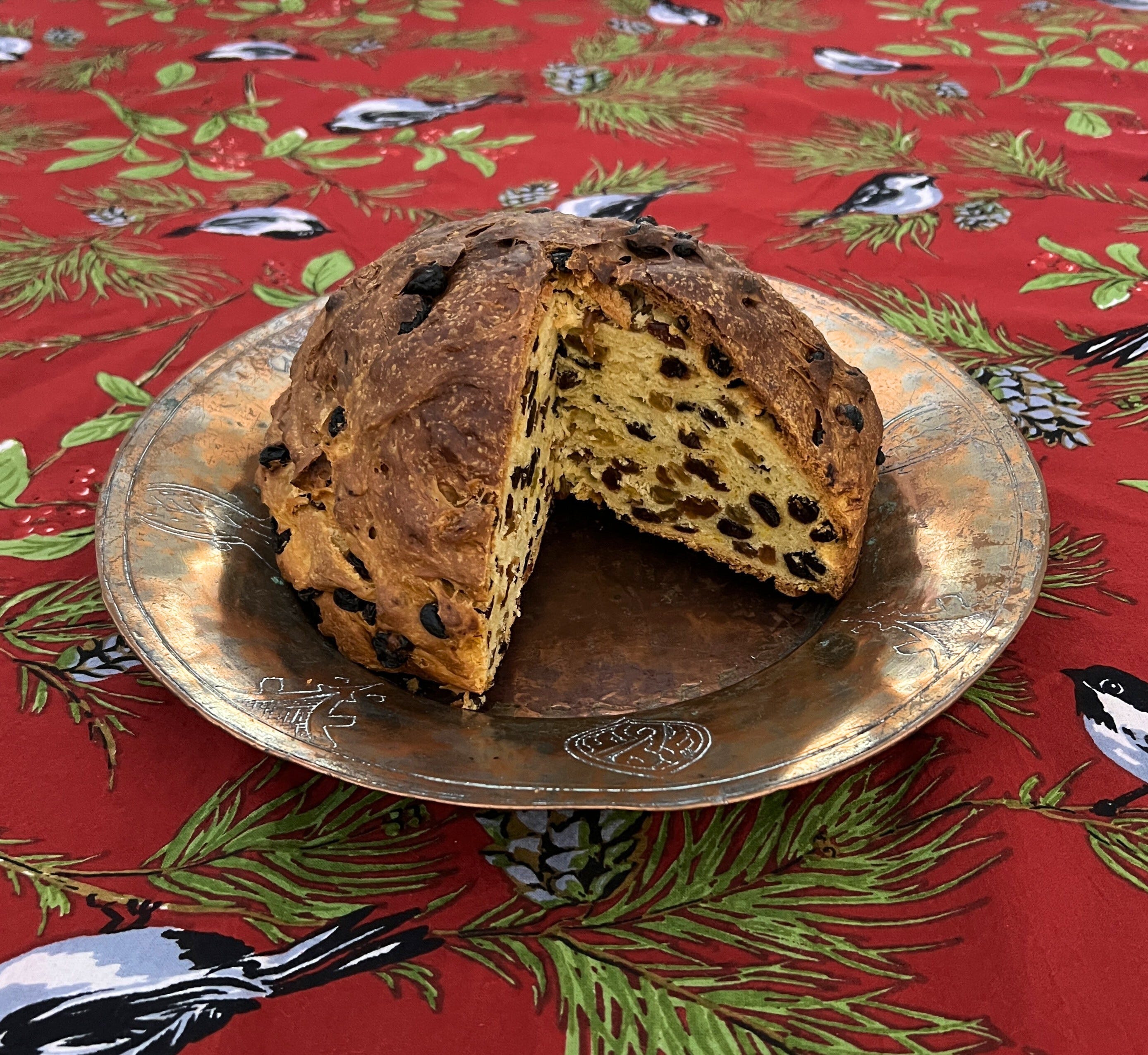
Recently, I’ve been baking saffron cake. This is a retelling and updating of a story I first told a long time long ago; I’ve partly rethought the recipe.
The medicinal aroma of saffron — like iodine and hay, or, I think, more like cedar shavings and fresh tobacco — complements fish and sweet things and appears mysteriously in some aged Sauternes. From the moment I heard of the yeast-raised, raisin-filled Cornish saffron cake, the idea was evocative. It lived in my imagination for years before I tasted or made it. Raisin-and-currant loaves made with lard or butter, and called bread or cake interchangeably, have been popular in Britain for centuries. They vary in shape, texture, and ingredients, such as eggs, honey, and spice. There are Lincolnshire plum bread, Yorkshire teacake, Bara Brith from Wales, Borrowdale tea bread, Guernsey gâche, Ripon spice cake, Selkirk bannock, Whitby lemon bun, and, also from Cornwall, (saffronless) heavy cake. Cornish saffron cake is the only survivor of the medieval English cakes colored and flavored with saffron, which was a commercial crop in England from the 1500s to about 1900. Cornwall, at the southwest tip of England, may have been one of the last places in the country where saffron was grown, which would explain why the Cornish continued to bake with it after it was abandoned nearly everywhere else. Cornish Recipes Ancient and Modern, published in 1929, has ten recipes for the cake. The original point was surely celebration.