


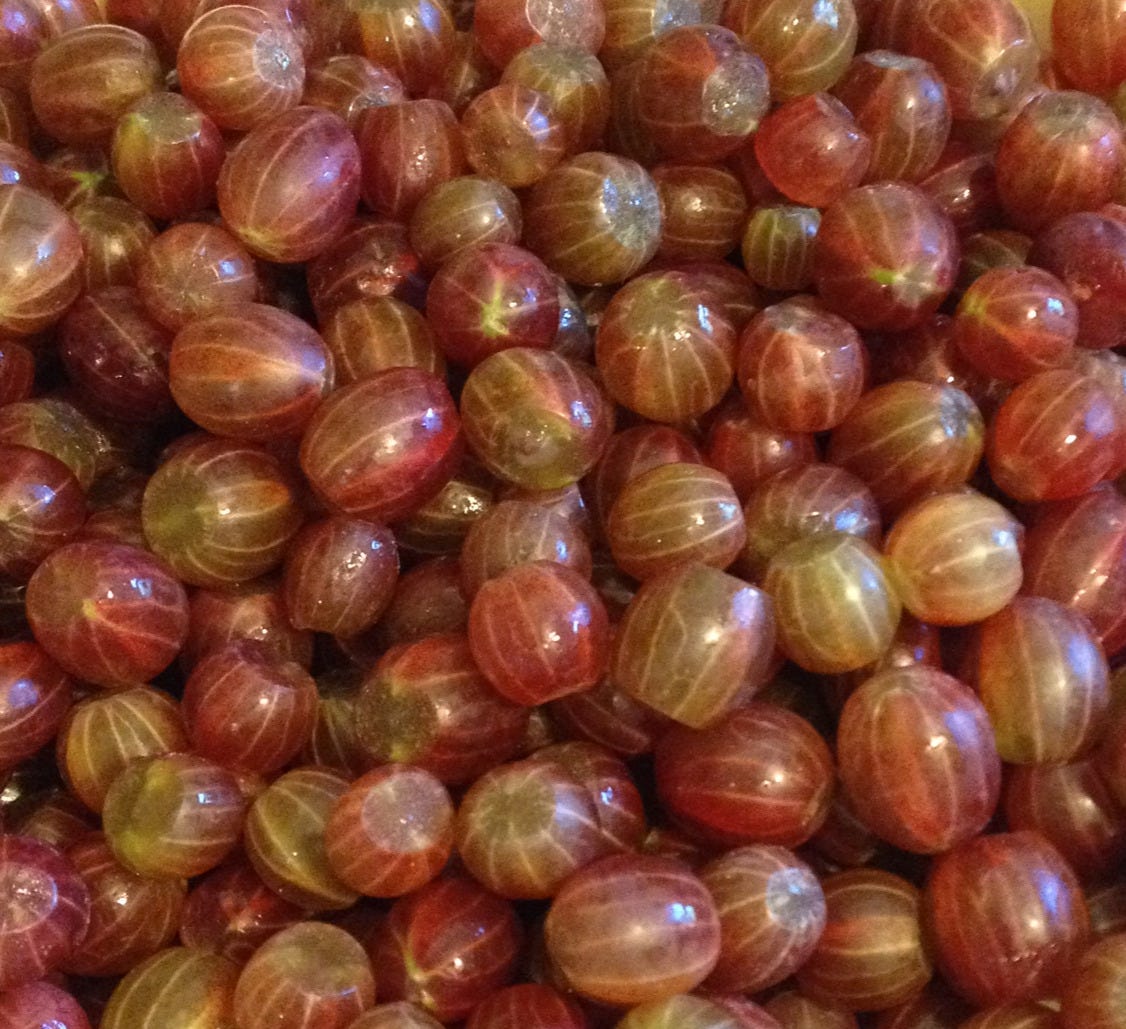
SOME PEOPLE LOVE gooseberries. They’re a cool-climate fruit, appreciated particularly in Russia, Germany, Poland, and the United Kingdom. The variety I’ve mostly grown, Hinnonmaki Red, is Finnish. The berries are tart. As a rule, they don’t have a lot of fruit flavor, but they’re interesting. Gooseberries become less acidic and more approachable as they ripen, but they remain sharp; hardly any variety is good eaten off the bush. Normally, they’re cooked with plenty of sugar. European and American gooseberries belong to two different species, and Europe, after hundreds of years of breeding, has many more varieties. Some have small fruits, some large, and, according to the variety, they ripen to green, yellow, white, or red. All gooseberry bushes have thorns; you wear gloves when you pick them. Left on the bush, eventually the berries become raisined and the crisp insides turn soft. Harvested at peak, compared with most berries, they have a long shelf life.