


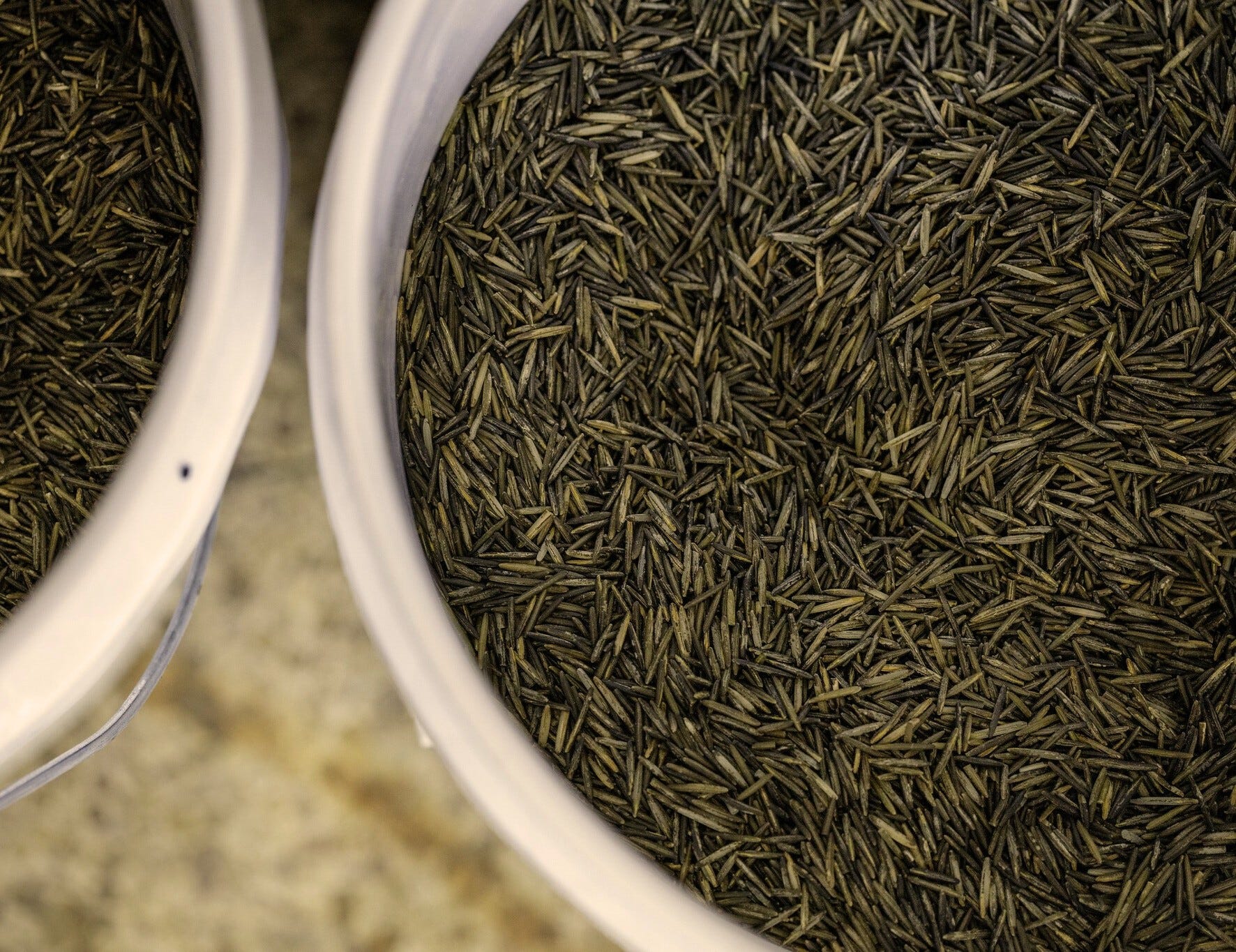
NORTHERN WILD RICE once grew in abundance in shallow, slow-moving waters in the broad region of the Great Lakes in the United States and Canada. The largest US concentration remains in Minnesota. That wild wild rice is very different from the kind in supermarkets, which is grown in paddies and harvested by machines, and has a thick, hard, nearly black coating and uninteresting flavor. Truly wild rice is olive green to brown mixed with tan. It tastes nutty, usually toasted, slightly grassy, with something like the essence of tea, anywhere from green to black, depending on the example. It isn’t rice at all, of course, but the seed of a tall, annual aquatic grass, Zizania palustris. (There’s also southern wild rice, Zizania aquatica, whose seed is smaller, thinner.) Northern wild rice was and is essential food of the Ojibwe people, called by them manoomin, “the good seed.” Nineteenth-century treaties recognize the Ojibwe right to hunt, fish, and gather not just on their reservations, but on the land that was formerly theirs and that they ceded to the United States.